

Behind the Signs: Meet the People and Technology That Keep Us Moving


Celebrating National Technology Day with Ian, ITS Technician
Editor’s note: find definitions for technical terms used in this article at the end of this blog.
Have you ever wondered how the sign on the front of your bus knows exactly when to change from “Coburg Road” to “Downtown”? It might look like “auto-magic,” but it’s actually a sophisticated web of hardware and software working in perfect sync.
To celebrate National Technology Day, we’re going behind the scenes with Ian, our Intelligent Transportation Systems (ITS) Technician, to look at the “technological backbone” that keeps LTD moving.
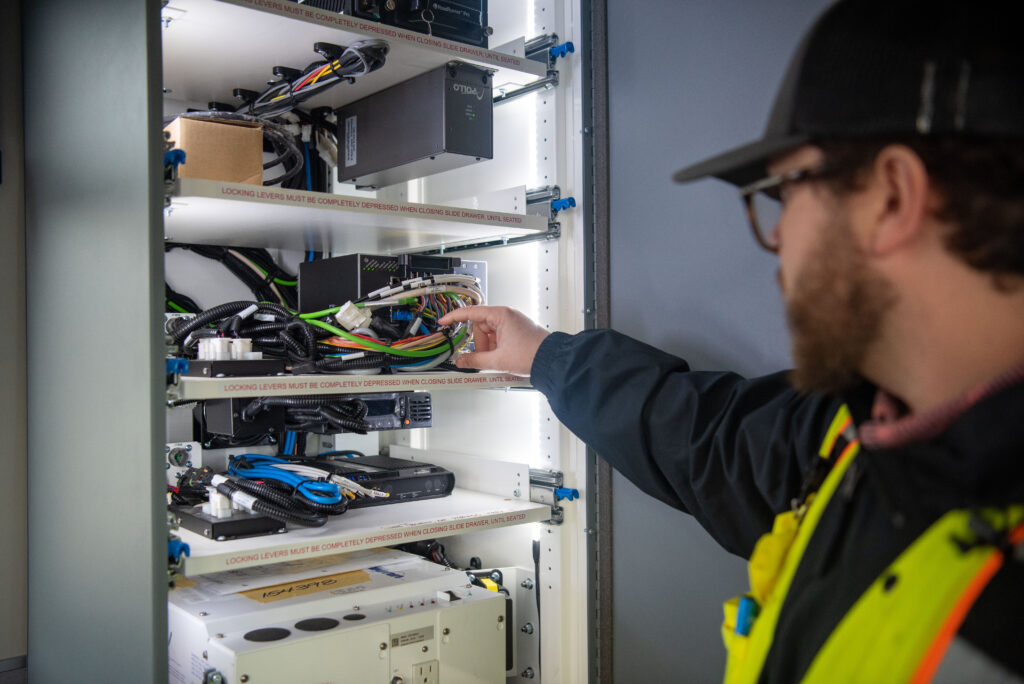 Ian points out the purpose of each cable connected to the In-Vehicle Logic Unit.
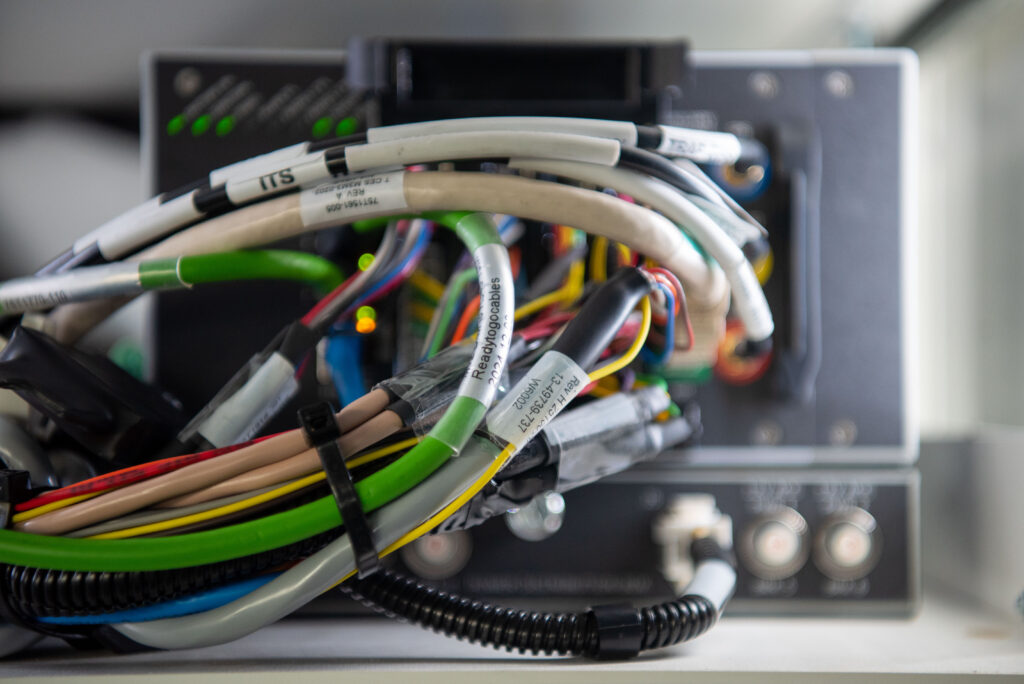 J1708 and J1939 CAN bus harnesses interfacing with the in-vehicle logic unit, enabling multiplexed serial communication for powertrain coordination, sensor integration, and real-time monitoring of vehicle subsystems.
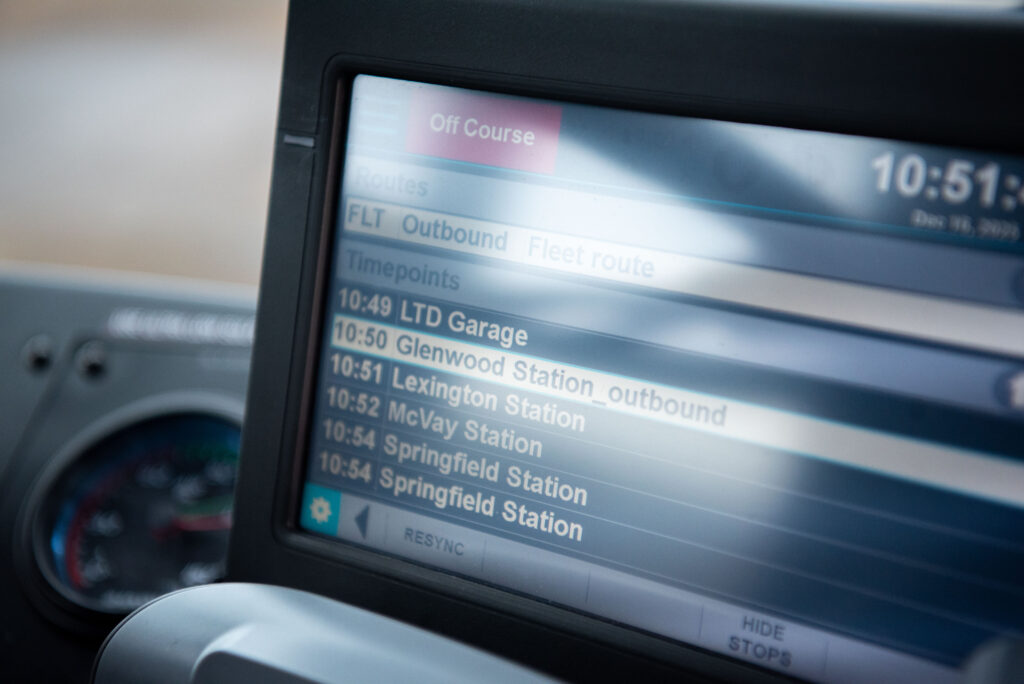 The Mobile Data Terminal (MDT) sits to the right of the steering wheel, offering bus operators quick access to communicate with staff and riders.
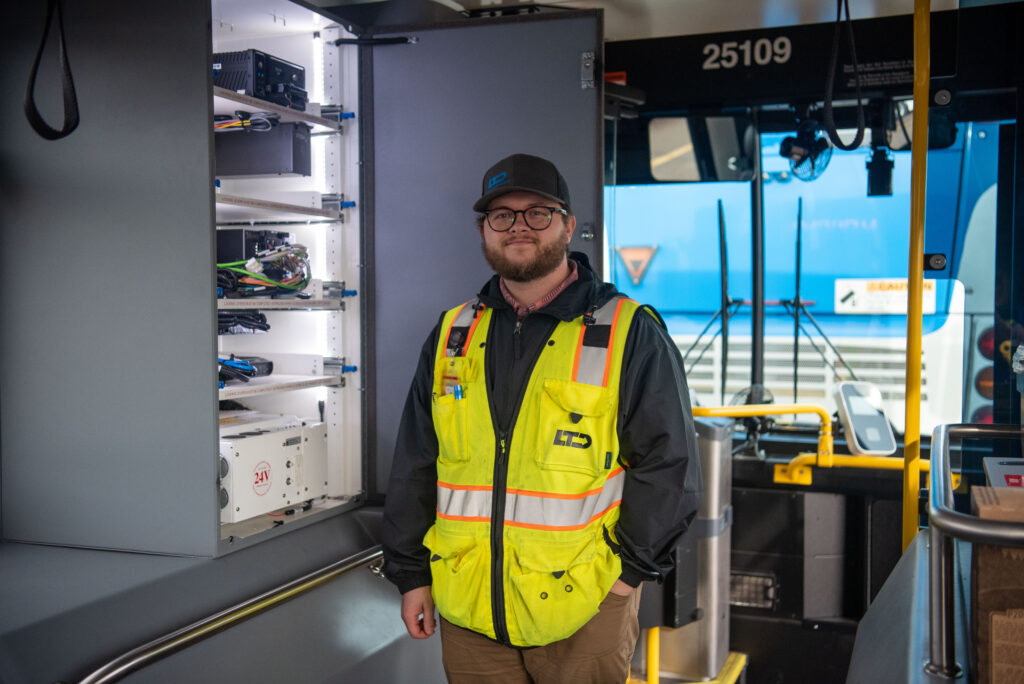 On board one of LTD’s newest buses, Ian stands in front of the cabinet that houses the technology hardware of the bus.
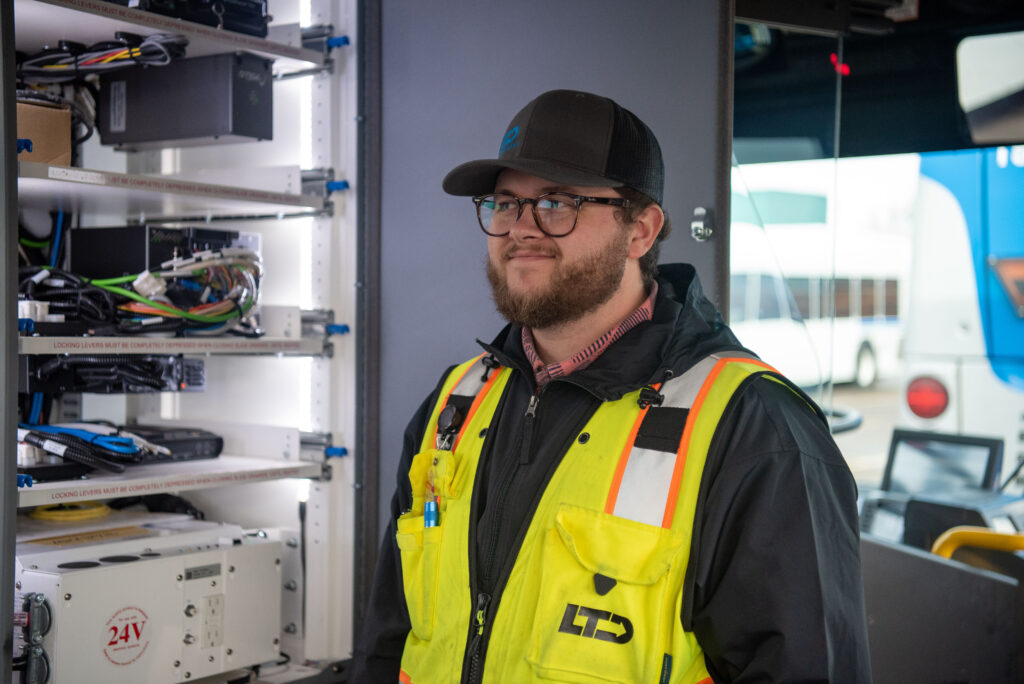 Ian, Intelligent Transportation Systems (ITS) Technician
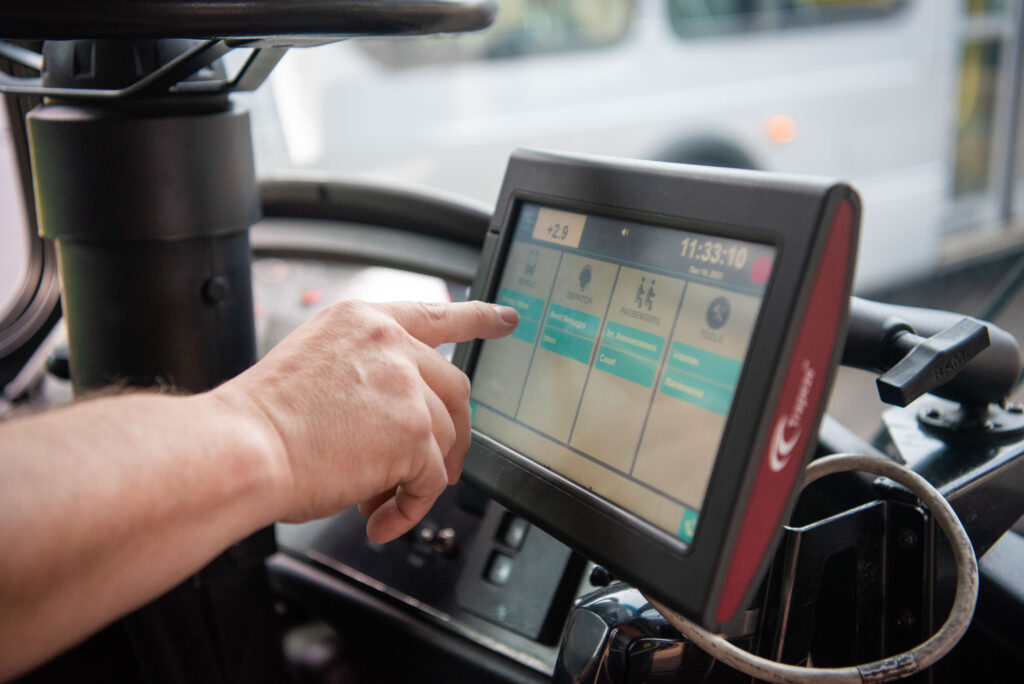 The Mobile Data Terminal, a tablet in the driver’s area, allows bus operators to quickly communicate with LTD’s dispatch team, who can help problem solve with the bus operator in real-time.
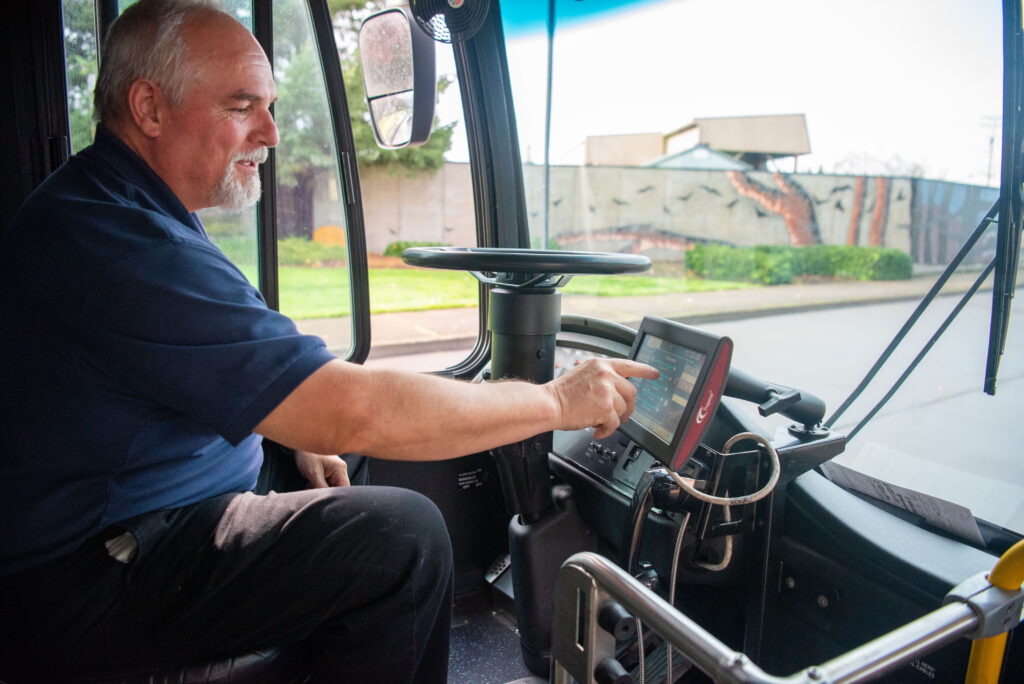 A bus operator at Springfield Station uses the touch screen Mobile Data Terminal
The Brain of the Bus
The process starts before the wheels even turn. When a bus operator starts their shift, they log into a Mobile Data Terminal (MDT) — a tablet in the driver’s area. This serves as a visual aid and tool for the bus operator, which is a display for the In-Vehicle Logic Unit (IVLU), connecting the bus to our Computer Aided Dispatch (CAD) and Automated Vehicle Location (AVL) systems.
CAD/AVL is the technology “brain” for our fleet. It uses GPS to track every bus in real-time, ensuring we stay on schedule and provide accurate arrival predictions to your favorite transit apps. It also helps the bus operator stay in communication with LTD’s dispatch and public safety teams.
How the Signs Change
There are two main ways those external Head Signs (the LED displays on the front, sides, and sometimes rear) stay updated:
- The “Auto-Magic” Way (GPS Triggering): As the bus travels, the system recognizes specific timepoints — major stops or geographic landmarks — using GPS coordinates. When the bus hits a “trigger zone,” the system automatically tells the sign to update to the next destination.
- The Communication Flow: For manual or complex changes, a command travels through the bus’s internal nervous system.
- The Command: The operator or the system sends a request via the MDT.
- The Network: That signal travels across the J1708 Network, a heavy-duty communication standard used in large vehicles.
- The Hub: The signal hits the In-Vehicle Logic Unit (IVLU), the onboard computer hub.
- The Result: The IVLU tells the destination controller to update the LED signs instantly.
Why It Matters
While this technology is standard across modern transit agencies, it requires skilled professionals like Ian to keep these systems running seamlessly. From the GPS, LTE (cellular), and UHF radio antennas on the roof to the wiring behind the dash, these systems ensure that every rider knows exactly where their bus is headed.
“A functional CAD/AVL system helps us connect our community by delivering accurate real-time information, improving reliability, and ensuring safety — values that reflect our commitment to respect, integrity, innovation, equity, and safety,” Ian said. “By enabling timely head sign changes, clear route communication, and rapid incident response, we create a more connected, sustainable, and equitable transit experience, reducing uncertainty and making public transportation accessible and dependable for everyone.”
Meet Ian
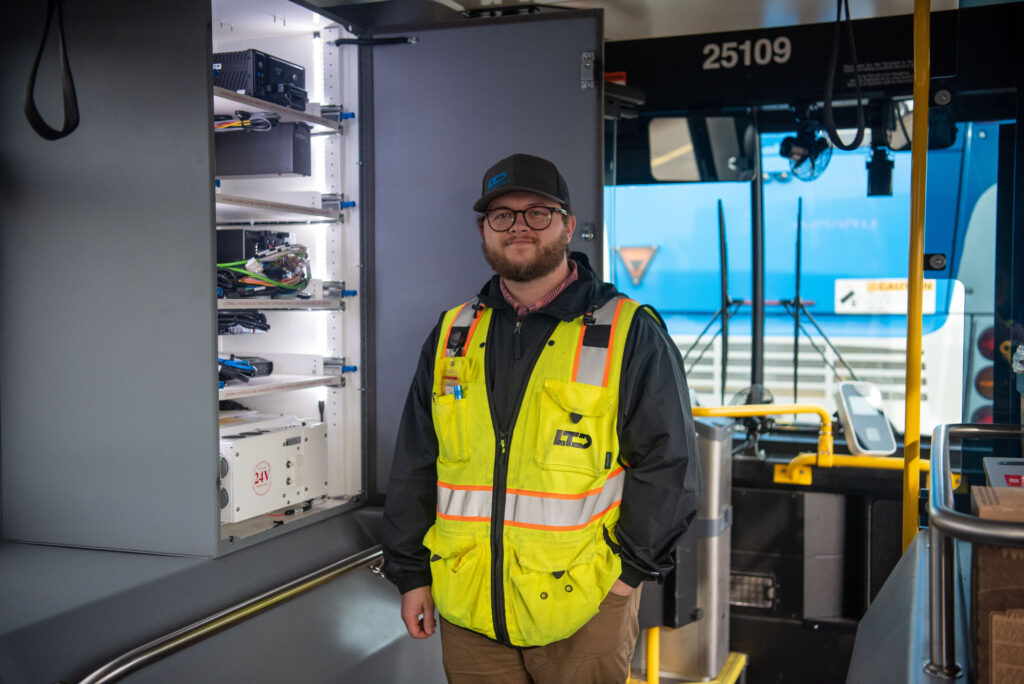
Ian has been with LTD since March 2024, where he has gained insight into the vast yet close-knit world of public transportation and intelligent transportation systems (ITS). Prior to this role, he spent two years as an IT contractor supporting the U.S. Army Corps of Engineers (USACE), serving as the primary IT resource for all 13 USACE-operated dams in the Willamette Valley, as well as ranger stations and administrative offices from Salem to Medford. Before that, he served six years in the U.S. Navy as an Electronics Technician (ET2) with Naval Mobile Construction Battalion 133, where he built a strong foundation in mobile communications with the Seabees — a heritage-rich branch of the Navy’s expeditionary ground forces. Ian has lived in Lane County for four years now with his wife, Kelly, their dog, Riley, and their cats, Kevin and Gibby. Ian is proud to call this place home and grateful for the opportunity to continue serving his community in meaningful ways.
Tech Terms to Know
- CAD (Computer Aided Dispatch): Software used by dispatchers to coordinate vehicles and track them in real-time.
- AVL (Automated Vehicle Location): GPS technology that tracks where the bus is at any given moment.
- MDT (Mobile Data Terminal): The driver’s onboard computer for route and schedule data.
- IVLU (In-Vehicle Logic Unit): The central hub computer inside the bus that processes all ITS functions.
- J1708 Network: The specialized “language” and wiring used by heavy-duty vehicle components to talk to each other.